|
Stable Economy and Bubble Burst
1971~1980
Takeo Miki
Takeo Fukuda
Masayoshi Ohira
Zenko Suzuki
1981~1989
Yasuhiro Nakasone
Noboru Takeshita
1989~1991
Sosuke Uno
Toshiki Kaifu
Takeo Miki (Dec 9, 1974-Dec 24, 1976, 747 days, Liberal Democratic Party)

Chosen as a “pure” politicians to wipe away the image of LDP having a power of money.
Takeo Fukuda (Dec 24, 1976-Dec 7, 1978, 714 days, Liberal Democratic Party)
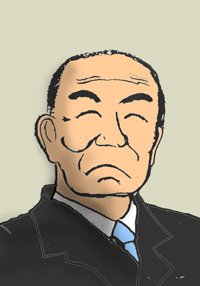
He criticized inflation and successfully revived the economy hurt from the inflation caused by Tanaka’s cabinet.
He was appraised with “Fukuda Doctrine,” the policy of diplomacy with Southeast Asia. The cabinet officially signed Treaty of Peace and Friendship between Japan and the People's Republic of China which was officially ratified on October 23, 1978.
Masayoshi Ohira (Dec 7, 1978-Nov 9, 1979 Nov 9, 1979-Jun 12, 1980, 554 days, Liberal Democratic Party)

He was high in political ability, but the opposition parties criticized the LDP by its money politics. The parliamentary motion of non-confidence against the cabinet was passed because of the intention of the cabinet to set up a consumption tax.
He died of heart failure during the election campaign.
Zenko Suzuki (Jul 17, 1980-Nov 27, 1982, 864 days, Liberal Democratic Party)

Suzuki gathered Second Special Meeting of the Administrative Investigation to abolish free medication for elderly, reconsider the textbook-free system, abolishing the class of 40 in elementary and middle school. This movement has created new trend in the politics.
Yasuhiro Nakasone (1st: Nov 27, 1982-Dec 27, 1983 2nd: Dec 27, 1983-Jul 22, 1986 3rd: Jul 22, 1986-Nov 6, 1987, 1806 days, Liberal Democratic Party)
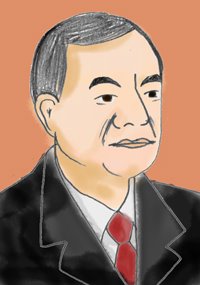
His cabinet mainly tried grapple with the problems of administrative reform. The cabinet privatized Japanese National Railways (now JR) which marked huge deficits every year, Japan Tobacco and Salt Public Corporation (now JT), and Nippon Telegraph and Telephone Public Corporation (now NTT).
Nakasone also played a huge role in diplomacy.
He announced Japan-Korea Joint Declaration of 1984, and discussed the nuclear weapon in Okinawa with President Reagan. His effort made it successful for the nations worldwide to admit Japan’s power.
Noboru Takeshita (Nov 6, 1987-Jun 3, 1989, 576 days, Liberal Democratic Party)

Takeshita set forth a “Furusato-Sosei Project,” which subsidized 100 million yen to each local government to activate its economy.
The cabinet also set the consumption tax of 3% from April 1, 1989 which is known as the first tax reform in 39 years.
Sousuke Uno (Jun 3, 1989-Aug 10, 1989, 69 days, Liberal Democratic Party)
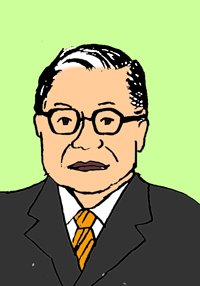
He was expected much as the “clean and pure” politicians but resigned in 69 days from the criticism of Recruit Scandal, immorality, the problems from the consumption tax.
Toshiki Kaifu (1st: Aug 10, 1989-Feb 28, 1990 2nd: Feb 28, 1990-Nov 15, 1991, 818 days, Liberal Democratic Party)
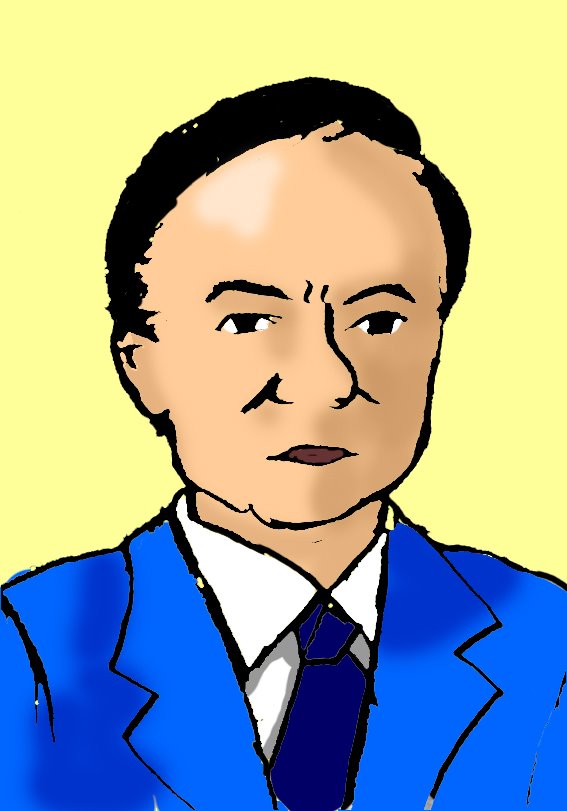
He tried to get rid of the distrust to the government from scandals, but failed to pass “PKO bill” for Gulf War (A war between Iraq which invaded Kuwait and multinational force lead by America) and take steps to prevent the burst of the bubble. This made the collapse of markets even worse over years.
|